In most countries, race is a topic to be reckoned with, and the issues are not constrained to white and non-white people. This page focuses on the most broadly familiar example, which is the race issues in the United States of America. Race concerns exist in all parts of the world, and in the West, the tone of race discussions are heavily influenced by the American Civil Rights Movement. This is where Critical Race Theory (CRT) originated from with a focus on legal concerns. As time passes CRT has increasingly begun to focus on language and power considerations, particularly within social structures.
Race
Often when the topic of race arises it is within the context of skin color, although that is not the only racial distinguishing feature. Typically we hear the juxtaposition of white and non-white people as the central issue to be addressed, and it is often considered that white in Western societies is the norm, effectively having no race, and then everything else is at odds with that; everything else is therefore other. This othering is a consistent theme within many topics discussed on ywoke, as there are very strong links between race, colonialism, and historically with slavery, in addition to the CRT spin-off concept of intersectionality.
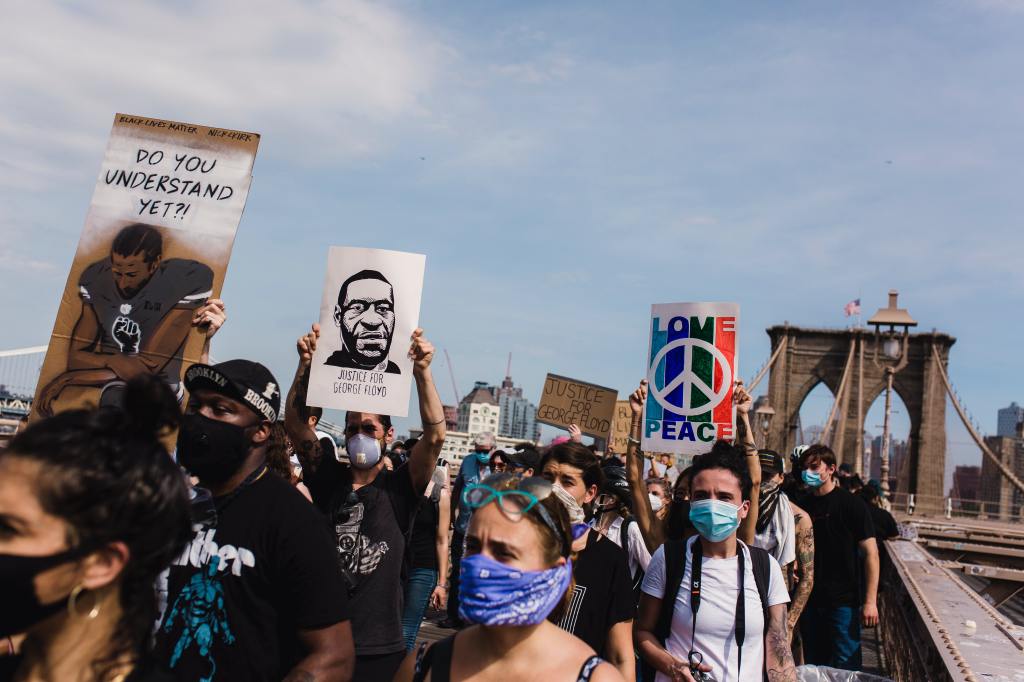
Certainly in recent years with the Black Lives Matter movement and high profile police shootings in the USA we are all acutely aware of the core concept, though the way that systemic racism in the USA evolved post the slavery ending Civil War is complex, and goes right from Jim Crow laws of the 1800s, through to broader voter suppression, educational and economic opportunities, to the civil rights movement of the 1960s and then the devastating criminalization of Black America via the drug epidemic and subsequent legal responses and mass incarceration of the 1980s and 1990s.
Assuming most people believe they understand race, it is useful to consider that scientifically it is rather irrelevant, given that everyone on earth shares 99.9% of their DNA with everyone else. Yes, there are variances of skin color and tone, along with other physical features, but it is becoming widely acknowledged that race is mostly a socially constructed concept. A stark example of this is that we know there were multiple races involved in the stories in The Bible, yet race barely gets a mention, presumably because it wasn’t considered important; race has been including in interpretations of the The Bible retrospectively but this was done much later to help justify social viewpoints.
There is growing recognition that race in fact was a rather recent concept (17th to 18th century) which became useful for justifying colonialism and slavery, particularly as colonized and enslaved people started converting to Christianity. This is because it meant that this could no longer be the justification for their oppression. Race allowed colonizers to set up the concept of others, and more specifically the uncivilized others. Even once the West became sophisticated with the enlightenment, the religious justifications were replaced with spurious early scientific justification (e.g. early Anthropology).
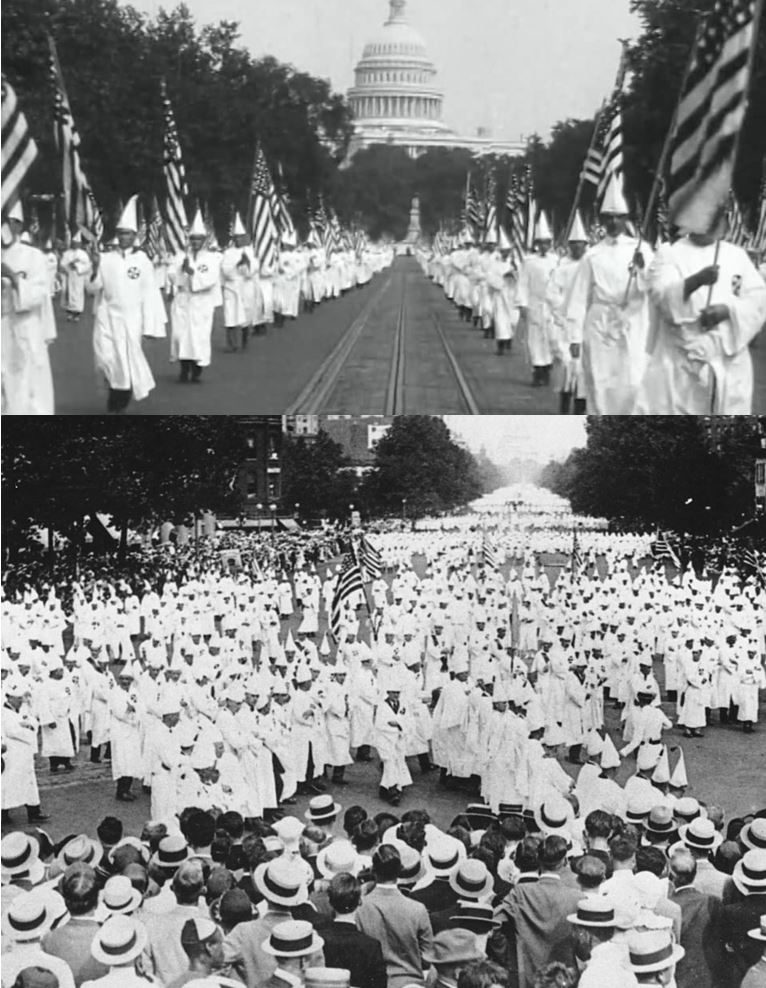
With the abolishment of slavery after the America Civil War (1861 – 1865), one mechanism of oppression was removed, but was quickly replaced by Jim Crow laws within a few years that entrenched segregation into law for another 100 years in many Southern States. These laws were supported by a wide array of propaganda.
Warning: The below images are confronting, but the movie depicted has had such a profound impact on race perceptions in America and beyond that it cannot be ignored here.
The 1915 silent film Birth of a Nation is now universally condemned for its racist depiction of Black Americans, its glorification of white supremacy, and its glorification and popularization of the KKK. Adapted from Thomas Dixon Jr.’s 1905 novel and play The Clansman, the film portrays African Americans as unintelligent and sexually aggressive toward white women. The film presents the Ku Klux Klan (KKK) as a heroic force necessary to preserve American values and a white supremacist social order. It was the first American motion picture to be screened in the White House, viewed there by President Woodrow Wilson. This film is largely regarded as setting the racial undertones of 20th century America.

Critical Race Theory (CRT)
Critical Race Theory (CRT) is a theoretical framework generating a lot of heated discussion in the United States (and in some states legislative change), with limited application, but some influence, in other countries. Originating with a focus on race and the law, it has been historically described as having two broad camps, one camp of materialist theorists focusing on wealth and assets, and one camp of post modernist focusing on discourses (e.g. language) and power, which tends to be the dominant camp most frequently found today.
According to Brittanica critical race theorists hold that racism is inherent in the law and legal institutions of the United States insofar as they function to create and maintain social, economic, and political inequalities between whites and nonwhites, especially African Americans (i.e. systemic racism). Critical race theorists are generally dedicated to applying their understanding of the institutional or structural nature of racism to the concrete (if distant) goal of eliminating all race-based and other unjust hierarchies.
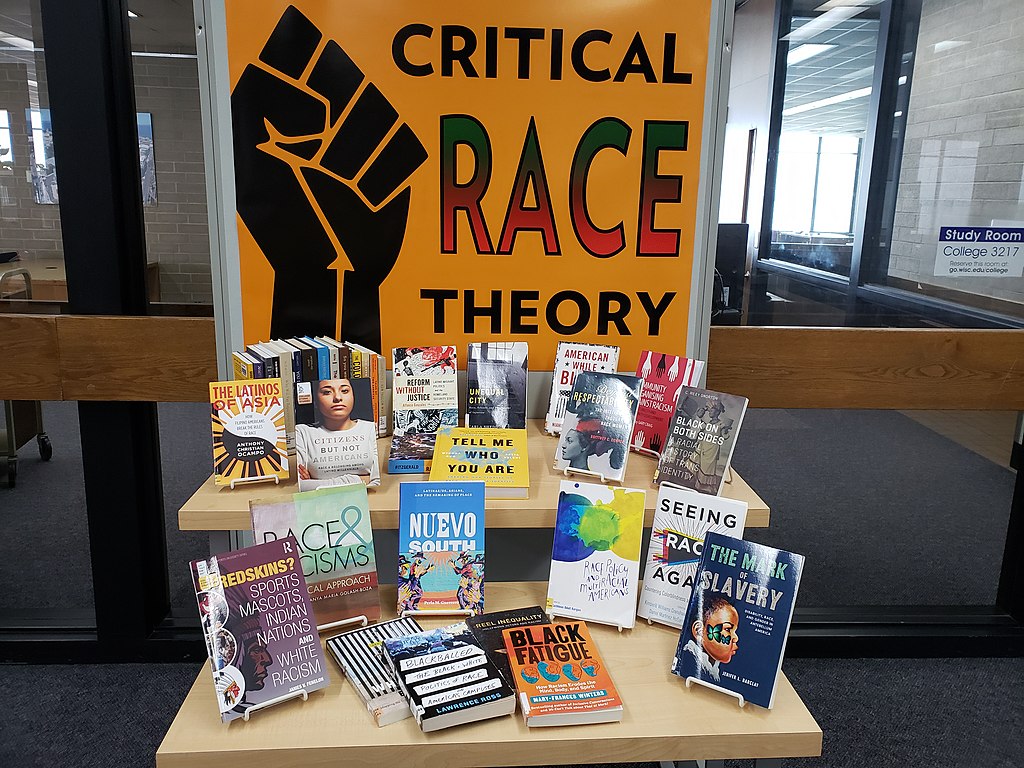
The American Bar Association describes how CRT is not a diversity and inclusion “training” but a practice of interrogating the role of race and racism in society that emerged in the legal academy and spread to other fields of scholarship. Crenshaw—who coined the term “CRT”—notes that CRT is not a noun, but a verb. It cannot be confined to a static and narrow definition (the postmodern influence) but is considered to be an evolving and malleable practice. It critiques how the social construction of race and institutionalized racism perpetuate a racial caste system that relegates people of color to the bottom tiers. CRT also recognizes that race intersects with other identities, including sexuality, gender identity, and others. CRT recognizes that racism is not a bygone relic of the past. Instead, it acknowledges that the legacy of slavery, segregation, and the imposition of second-class citizenship on Black Americans and other people of color continue to permeate the social fabric of this (US) nation.
Although it can be hard to specifically define, there are several general propositions of CRT that are frequently identified:
- Race is socially constructed and is not a meaningful biological fact, which we now know is supported by the modern studies of genetics where any genetic difference are minor and trivial, including in medicine once socioeconomic factors are accounted for. Unfortunately for humanity, we are all exceptionally good at spotting these extremely minor racially identifiable differences.
- Racism in the United States is normal and though widely visible to African-Americans is typically regarded as something in the past by white Americans. For white America slavery ended in 1865, with the less oppressive Jim Crow laws ending in the mid-20th century, and further progress in the Civil Rights movement of the 1960’s, and ultimately the first black President putting a final celebratory ribbon to the end of racism. For many African-Americans, the systems and hierarchy of racism are still in place and fully functional, along with “microaggressions” which are subtle racial slights or assumptions, often unintentional, but still with the result of oppressing.
- Acknowledgement that racism is a normal feature of society and is embedded within systems and institutions, like the legal system, that replicate racial inequality. This dismisses the idea that racist incidents are aberrations but instead are manifestations of structural and systemic racism.
- Rejection of popular understandings about racism, such as arguments that confine racism to a few “bad apples.” CRT recognizes that racism is codified in law, embedded in structures, and woven into public policy. CRT rejects claims of meritocracy or “colorblindness.” CRT recognizes that it is the systemic nature of racism that bears primary responsibility for reproducing racial inequality.
- Recognition of the relevance of people’s everyday lives to scholarship. This includes embracing the lived experiences of people of color, including those preserved through storytelling, and rejecting deficit-informed research that excludes the epistemologies (knowledge) of people of color.
Importantly, CRTs goals are not generally regarded as being inherently covered by, or even aligned to, liberalism. First and foremost to CRT legal scholars in 1993 was their “discontent” with the way in which liberalism addressed race issues in the U.S. They critiqued “liberal jurisprudence”, including affirmative action, color-blindness, role modeling, and the merit principle. Specifically, they claimed that the liberal concept of value-neutral law contributed to maintenance of the United State’s racially unjust social order.
A formula that people sometime point to is that: Racism = Prejudice + Power
The above formula shows why prejudice by non-white people may indeed exist, however, in societies where whites have the power this cannot elevate to the level or racism, e.g. there is by definition no racism by black people against white people. This is because, according to CRT, rights have only been given to black people by whites when it has been in the interest of whites to do it. Whites therefore maintain the power.
CRT has become a highly politicized issued in many countries, none more than the US. In particular the teaching of CRT in schools and other public and private settings has become a significant political flash-point and the focus of many news stories, books, and increasingly State level legislation. The topic is so heated that while researching this page it has been very difficult to find objective sources of information.
Some related woke concepts and theories:
- Standpoint Theory
- Intersectionality
- Identity Politics
- White Privilege
- Cancel Culture
- Social Justice
- Research Justice
- Lived Experiences
- Implicit Association Test
Advocates might say
- CRT is a valuable tool for addressing racial inequities.
- Without addressing power imbalances and discourse bias with CRT progress with equality cannot be made.
- The heated resistance to CRT is based on white peoples discomfort with being faced with their privilege.
Critics might say
- Liberal support for CRT is largely based on liberal ignorance of specifically what CRT is advocating, e.g. CRT proponents are typically not supportive of the assumed self-evident color blind ideals.
- Racial injustice and CRT often cherry-picks and generalizes the worst examples.
- The supposed awareness education in schools, universities, and workplaces is effectively a type of indoctrination.
 ywoke
ywoke 