LGBTQ+ is an abbreviation of Lesbian, Gay, Bisexual, Transgender, Queer or Questioning, plus. These terms are used to describe a person’s sexual orientation or gender identity for anyone who is non-heterosexual (is not exclusively attracted to people of the opposite gender), or non-cisgender in that their gender does not align with their sex.
Note: There are varying opinions about which particular letters, and in which order, are most appropriate, or even if using letter are appropriate at all. For our purpose we are noting this discussion and using what seems to be the most widely accepted in the community which is LGBTQ+ and will update the page if some other identifier becomes more widely accepted.
Basic Terms
There are several definitions of familiar terms that can help us understand the categories within LGBTQ+.
Sex refers to the biological gender that we are born with, most often female or male. Therefore sex refers to the physical differences between people who are male, female, or intersex . A person typically has their sex assigned at birth based on physiological characteristics, including their genitalia and chromosome composition. Intersex is an umbrella term that describes bodies that fall outside the strict male/female binary based on physiological characteristics, and is therefore different from someone born male or female who identifies as non-binary but had an identifiable sex at birth.

Gender refers to the socially constructed characteristics of women and men including norms, behaviors and roles associated with being a woman or man. The social construction of gender varies from society to society, and has changed over time in many societies.
Gender can be hierarchical and produce inequalities (see feminisum) that intersect with other social and economic inequalities. Gender-based discrimination intersects with other factors of discrimination, such as ethnicity, socioeconomic status, disability, age, geographic location, gender identity and sexual orientation, among others. This is part of the broader concept of intersectionality.
Gender interacts with, but is different from sex, although there tends to be a high correlation in most societies. Gender and sex are related to but different from gender identity.
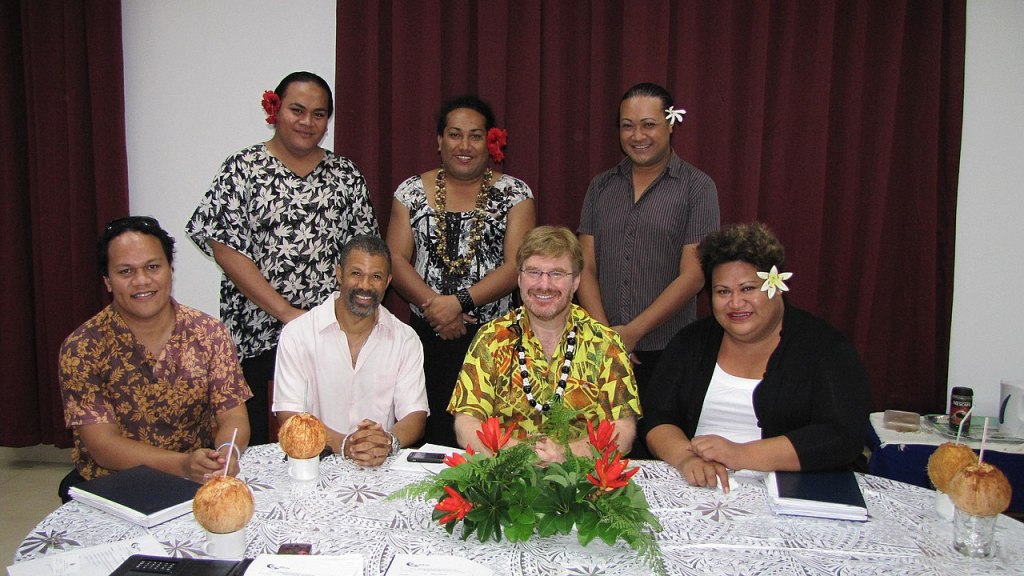
Historically, many cultures typically consider there to be two genders (binary) that align to two sexes, however a number of cultures have had 3 or more genders. For example in Samoa gender identity is largely based on a person’s role in the family, and if one family has numerous sons and no daughters, it’s not uncommon to raise one of the boys as a girl. Samoan Fa’afafine – or “Fafa” – are men who are raised as females and identify with that gender, typically having relationships with heterosexual men (though are not gay). I.
Gender identity is defined as a personal conception of oneself as male or female (or both or neither). This concept is intimately related to the concept of a gender role, which is defined as the outward manifestation of personality that reflect gender identity. Gender identity, in nearly all instances, is self-identified; gender role, on the other hand, is manifested within, but also by the society, by observable factors such as behavior and appearance.
Gender identity involves how a person identifies themselves along a broad spectrum. A person may identify at any point within this spectrum or outside of it entirely. People may identify with genders that are different from their birth sex or with none at all. These identities may include transgender, nonbinary, or gender-neutral. There are many other ways in which a person may define their own gender.
For example, if a person considers himself a male and is most comfortable referring to his personal gender in masculine terms, then his gender identity is male. However, his gender role is male only if he demonstrates typically male characteristics in behavior, dress, and/or mannerisms. Thus, gender role is often an outward expression of gender identity, but not necessarily so.

Sexual orientation is a term used to refer to a person’s pattern of emotional, romantic, and sexual attraction to people of a particular gender. Sexual orientation involves a person’s feelings and sense of identity; it’s not necessarily something that’s noticeable to others. People may or may not act on the attractions they feel. In particular cultural or religious factors may suppress peoples feeling from being disclosed to others, or at time might make it difficult for people to identify what their sexual orientation is, particularly during teenage years.

Unpacking LGBTQ
First we will unpack this specific acronym, before looking at some of what is covered by plus (+):
- Lesbian: Sex/Gender = Female | Sexual Orientation = Homosexual (Attracted to people of one’s own sex/gender)
- Gay: Sex/Gender = Male | Sexual Orientation = Homosexual (Attracted to people of one’s own sex/gender)
- Bisexual: Sex/Gender = Any | Sexual Orientation = Attracted to more than one sex/gender
- Transgender: Sex = Any | Sexual Orientation = Any | Gender = Does not match Sex
Note: Transgender and the related term transsexual have complex, nuanced, and debated definitions that cannot be adequately described here. - Queer: a very post modern term the eludes a clear definition, it is any orientation or identity that’s not straight is, or could be, considered queer, but it’s mostly if the person with that identity wants to see themselves as being part of a larger queer umbrella
- Questioning: Questioning which category they identify with
Unpacking +
A selection of the many other types represented by + however there are many others
- + Intersex: Sex = People with bodies that fall outside the strict male/female binary based on physiological characteristics which includes over 20 variations
- + Pansexual: Sex/Gender = Any | Sexual Orientation = Attracted to more than one sex/gender
- + Asexual: Sex/Gender = Any | Sexual Orientation = Not attracted to people of either sex/gender
- + Agender: No particular gender identification
- + Bicurious: A curiosity toward experiencing attraction to people of the same gender/sex (similar to questioning)
- + Non-binary: An umbrella term for people whose do not feel their gender identity aligns strictly with ‘man’ or ‘woman’. Non-binary perspectives are varied and can include people who identify with some aspects of binary identities, or reject them entirely.
Note: There interactions and nuances between the above LGBTQ+ types, which are not discussed in this high level overview.
A selection of other related/contextual terms
- Heterosexual (Straight): A sexual orientation in which a person feels physically and emotionally attracted to people of a gender other than their own.
- Cisgender: A gender description for when someone’s sex assigned at birth and gender identity correspond, i.e. not transgender. Sometime the term ciswoman, or cisman is used, or simply cis. This term is derived from the Latin root “cis,” meaning “on the same side.”
- Cisnormativity: the assumption, in individuals and in institutions, that everyone is cisgender, and that cisgender identities are superior to trans* identities and people. Leads to invisibility of non-cisgender identities.
- Coming out: When a person first tells someone/others about their orientation and/or gender identity.
- Deadnaming: Calling someone by their birth name after they have changed their name for gender or transitioning reasons.
- Homophobia: The fear or dislike of someone in the LGBTQ+ community, based on prejudice or negative attitudes, beliefs or views.
- Outed: When member of the LGBTQ+ community is disclosed to someone else without their consent.
- Pronoun: Words we use to refer to people’s gender in conversation, such as, ‘he’ or ‘she’. Some people (typically in the LGBTQ+ community but not necessarily) prefer others to refer to them in gender neutral language and use pronouns such as they/them or neopronouns (i.e. new pronouns) like ze/zir.
- Ally: A straight and/or cis person who supports members of the LGBTQ+ community.
What is with the flag?
The Rainbow Flag has become a symbol for LGBTQ+ pride and support
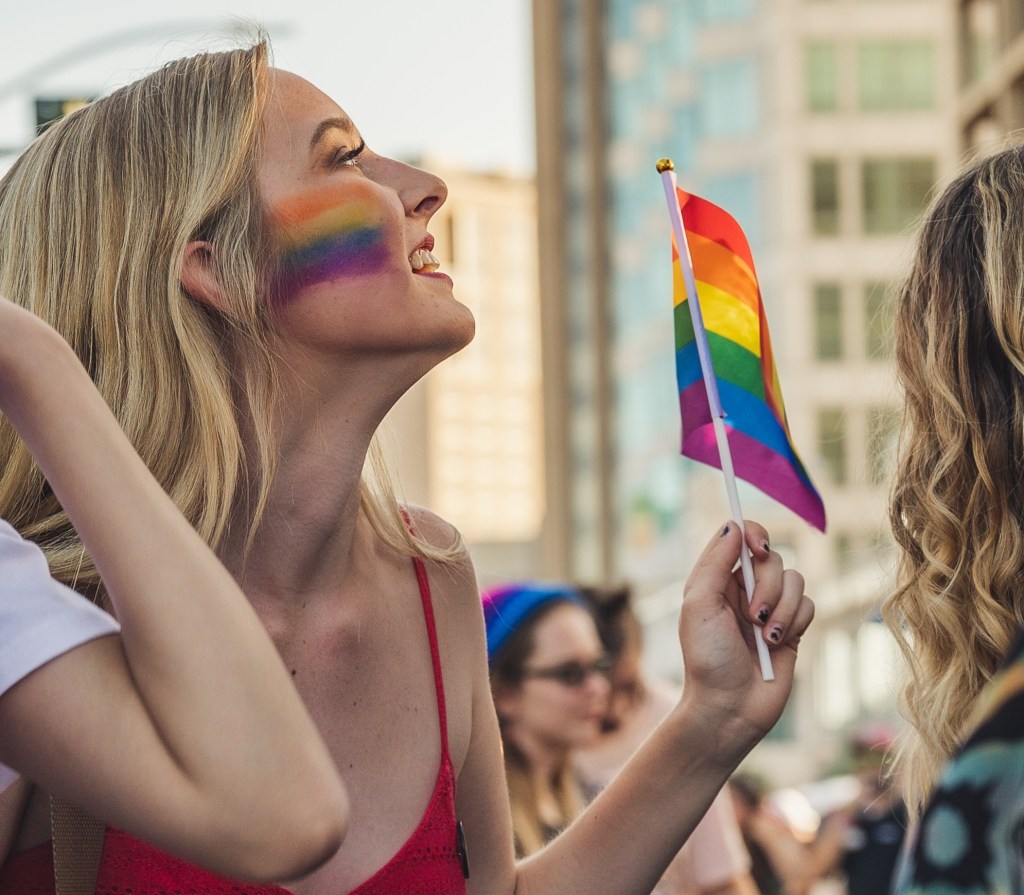
In 1978 artist Gilbert Baker, an openly gay man and a drag queen, designed the first rainbow flag as a symbol of pride for the gay community, later saying “Our job as gay people was to come out, to be visible, to live in the truth, as I say, to get out of the lie. A flag really fit that mission, because that’s a way of proclaiming your visibility or saying, ‘This is who I am!’”
Baker originally adopted eight colors for the stripes, each color with its own meaning (hot pink for sex, red for life, orange for healing, yellow for sunlight, green for nature, turquoise for art, indigo for harmony, and violet for spirit). The various colors came to reflect both the immense diversity and the unity of the LGBTQ+ community. Typically the flag is now shown with 6 colors.
The Rainbow Flag’s journey has somewhat paralleled the LGBTQ+ becoming increasingly well recognized and accepted over time in most western, and many other, countries, to the point where association is value enhancing for individuals and companies, and the flag itself has even becoming a marketing tool, while still maintaining its deep personal meaning for many people.
Controversies and Struggles
There have been, and still are, many controversies and struggles for the LGBTQ+ community, and for wider society in becoming fully welcoming for all community members. We will cover a sampling of some of these, but we note that the focus here is on western liberal democracies, and it must be recognized in many other countries struggles can include even the right to life and liberty.
- Legal – Gay Intercourse: These laws were largely focused on preventing gay sex, however were targeted on the act of sodomy. In theory the laws applied to gay and straight sex, but in practice were targeted at gay men. Most western countries have removed these laws. Many gay men do not participate in sodomy.
- Legal – Marriage: Still an ongoing struggle in some countries is the right to same sex marriage, with many countries instead enabling a civil union.
- Legal – Transgender: In many countries transgender people are not given the same access to spaces like bathrooms. It is noted here that many of the concerns are related to perceived safety for women and children.
- Legal – Rights: In many countries specific rights to the LGBTQ+ community have been enacted to try and ensure equal rights.
- Sports – Transgender: In recent time there are increasing challenges in sports relating to transgender sports people, typically transitioned women, participating among ciswomen, and relating to the biological advantages that they may have, particularly in strength related sports.
- Sports – Homophobia: In a number of sports it has been hard for people to be openly homosexual, particularly males sports where being “a real man” has been strongly associated with sporting prowess.
- Religion: There has been a long complicated relationship between LGBTQ+ and religion, which is still prevalent today, and perhaps most controversially including various “conversion theories” to “cure” so considered “conditions” like homosexuality, but also many other concerns such as right to same sex marriage.
- Health – Transgender: Access to and funding of various conversion treatments, particularly for adolescents.
Some related woke concepts and theories:
- Intersectionality
- Gender Studies
- Identity Politics
- LGBT
- Queer Theory
- Social Justice
- Cancel Culture
- Lived Experiences
- Implicit Association Test
Advocates might say
- Supporting LGBTQ+ enables basic human rights
- Supporting LGBTQ+ aligns to the essence of a liberal democracy
- Supporting LGBTQ+ enables a richer and more diverse society
- Supporting LGBTQ+ improves both physical and mental health outcomes
- Supporting LGBTQ+ helps reduce the harm to non LGBTQ+ people as people don’t have to pretend to fit norms, e.g. homosexuals marrying the opposite sex then neither person finding the happiness they seek
- God accepts all people!
Critics might say
- With equality achieved the LGBTQ+ community need to just accept they are now a normal part of society and just get on with it
- Why do we need LGBTQ+ pride parades today, we would not be able to have heterosexual pride parades
- From a post modern viewpoint all labels are discriminatory and unnecessary including LGBTQ+, people don’t fit into boxes, there is just things people do
- Women have fought hard for their rights over centuries, including in areas like sports, and it is not fair for transgender people born with a male sex to take advantage of those rights while still having the physical benefits of their birth sex
- God is displeased!
 ywoke
ywoke 